
The Restaurant365 and GSS Partnership: What the Software Automates and What the Financial Specialists Deliver?
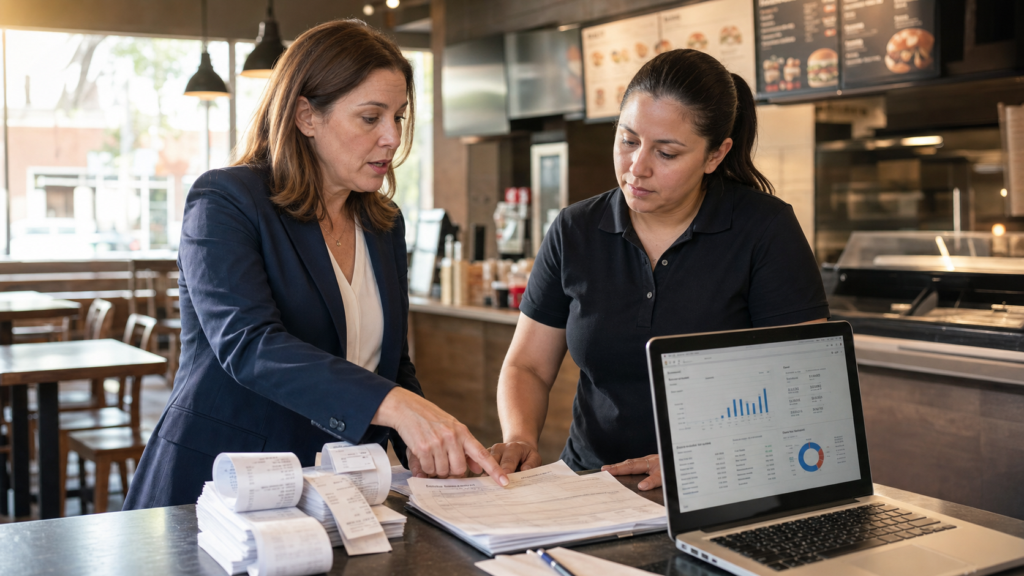
Restaurant365 automates the part of restaurant accounting that used to eat up hours every week: pulling sales, labor, and inventory data out of your POS and payroll systems so nobody has to key it in by hand. What it doesn’t do is review that data, catch the mistakes hiding inside it, or tell you […]
Multi-Unit Restaurant Financial Planning for Expansion: What to Fix Before Your Next Acquisition
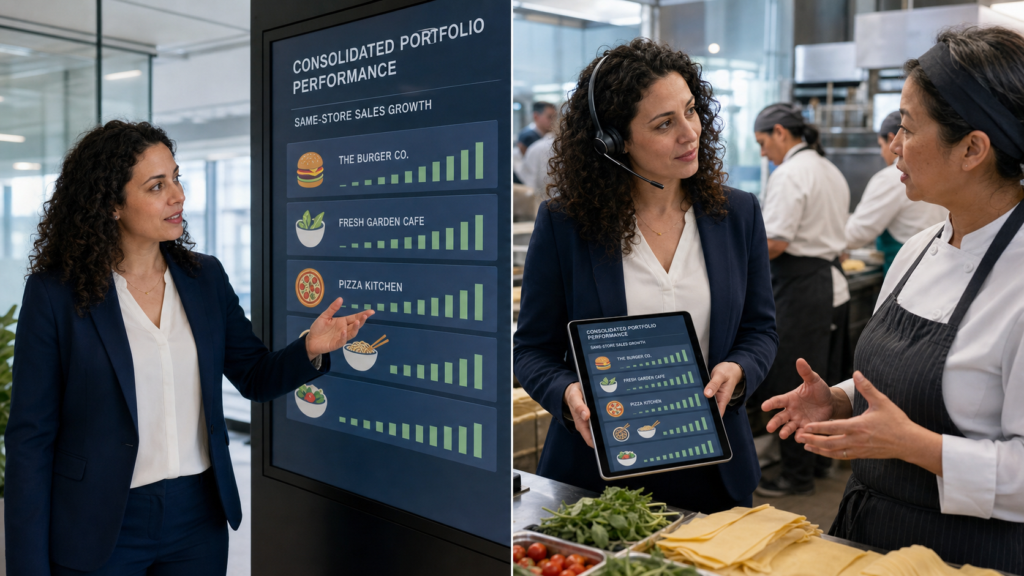
The Short Answer Before acquiring additional restaurant locations, a multi-unit operator needs a standardized chart of accounts, 12 to 24 months of fully reconciled financials, accurate store-level P&Ls, and a back office capable of absorbing new doors without extending the monthly close cycle. Without these operational accounting controls, scaling adds structural risk instead of EBITDA, […]
Restaurant Bookkeeping Services for Multi-Unit Restaurant Groups

Restaurant bookkeeping services for multi-unit operators should deliver daily sales reconciliation by location, weekly prime cost tracking, accounts payable processing, payroll integration, and period-end close within 5 to 10 business days. Most restaurant groups that switch to GSS have been closing in 15 to 30 days — a gap that costs a 10-unit group $15,000 […]
Restaurant P&L Statement: Structure, Benchmarks, and What Late Books Cost You
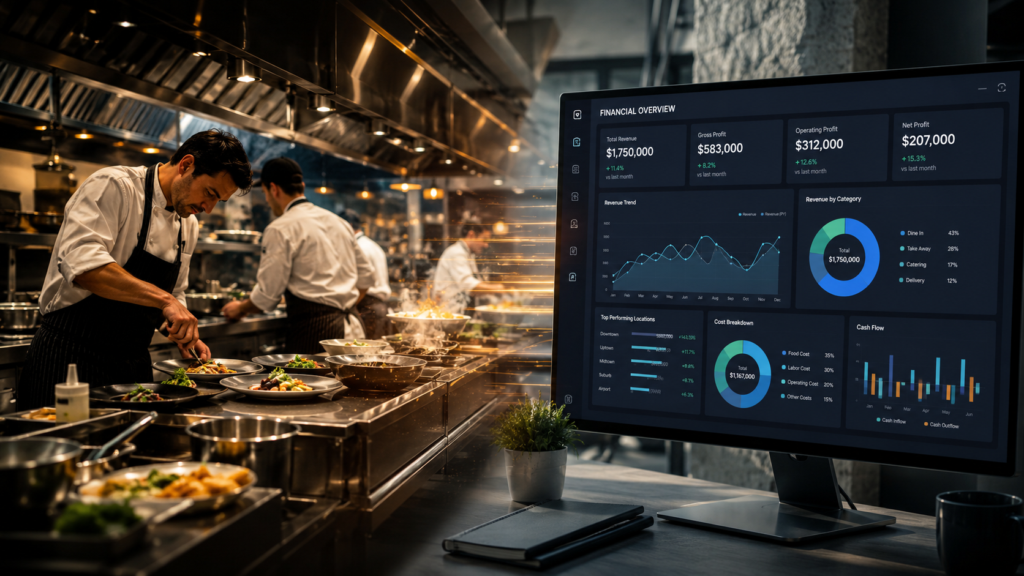
A restaurant P&L statement should close within 5 to 10 business days of period end – not 15, not 30. Every day your books stay open after day 10 is a day you’re making labor, inventory, and staffing decisions without real financial data. For a 10-unit restaurant group, that delay can silently cost $15,000 to […]
Restaurant Bookkeeping: The Multi-Unit Operator’s Guide to Accurate, Scalable Financial Operations

Restaurant bookkeeping is the daily, weekly, and period-end recording of every financial transaction a restaurant generates – sales, COGS, labor, tips, AP, bank activity, and inter-company transfers – reconciled against POS, payroll, and vendor systems on a fiscal calendar (typically 4-4-5 or 13 periods) instead of a standard month. For multi-unit operators, this rigorous process […]
Why Volume Beats Price Hikes During Restaurant Inflation

Restaurant inflation has forced operators to navigate rising food costs, higher wages, rising occupancy expenses, and increasing vendor fees, all while serving more price-conscious customers. While price increases can be necessary, they should not be the primary strategy for managing inflation. In our experience, the restaurants that perform best during inflationary periods are the ones […]
Why Raising Prices Isn’t Always the Answer to Rising Labor Costs

As restaurant labor costs rise, many operators feel boxed in. When wages increase, the obvious response is to raise menu prices. On paper, the math seems simple: if labor costs go up, prices should go up too. Price increases can be part of the solution, but they are rarely the whole solution. If you raise […]
Why Restaurant Budgeting is the Ultimate Growth Lever

Restaurant budgeting is important because it transforms unpredictable daily operations into a predictable financial model that guarantees debt repayment and funds expansion. A strict budget is the only mechanism that allows operators to proactively manage prime costs, secure bank covenants, and protect profit margins from sudden market volatility. This article is explicitly written for the […]
Why Restaurant Forecasting Matters for Scaling Multi-Unit Restaurant Chains

Restaurant forecasting is important because it allows operators to predict cash flow, strictly control prime costs, and secure necessary bank covenants before financial performance erodes. A predictive financial model transitions multi-unit hospitality groups from reactive survival directly into proactive, scalable profitability. In this article, we will cover how to build a predictive financial infrastructure, replace […]
The US Back-Office is Dying: 6 Myths Keeping Restaurant Operators From Scalability

The traditional U.S. back office is no longer a viable option for growing restaurant groups. Fewer people are entering the accounting profession. The result: a shortage of qualified accountants. Restaurant groups feel this shortage acutely. CPA firms recruit aggressively and offer clearer career paths than most internal accounting departments. Most restaurant groups can’t compete […]