

Restaurant operators need better systems to compete and scale, but they face an overwhelming array of vendor promises, conflicting advice, and the constant fear of making expensive technology mistakes. With hundreds of solutions competing for attention, how do you choose technology that works?
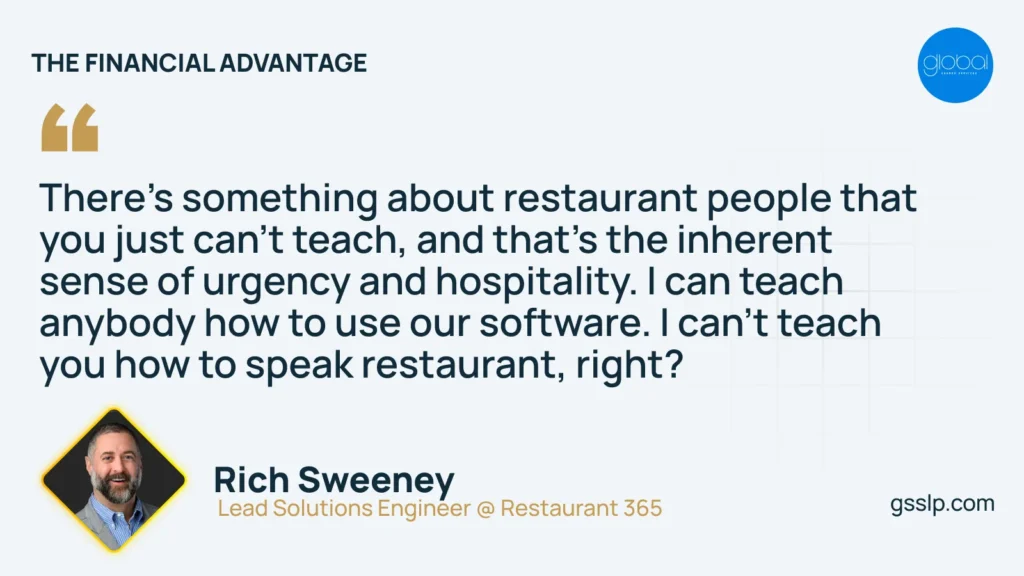
“Buying the wrong technology for your restaurant is the same as hiring a bad employee. It’s super expensive,” warns Rich Sweeney, Lead Solutions Engineer at Restaurant365. Poor technology decisions can drain resources that set businesses back months or years.
The challenge has intensified dramatically. Restaurant technology exploded from virtually nothing to an overwhelming array of options in just 15 years, explains Marc Cohen, Solutions Architect at Restaurant365. In this blog, you will learn about the importance of restaurant technology and some key facts about how to choose the most suitable option for every business.
What You’ll Learn:
Restaurant365 experts Rich and Marc share lessons from thousands of technology decisions, revealing what works versus what vendors promise.
Restaurant tech went from virtually nonexistent to overwhelming in just 15 years. Industry events now require parking lots just to accommodate all the technology vendors.
This rapid evolution created a challenge similar to restaurants that suddenly go viral — operators know they need to capitalize on available technology, but often lack the knowledge or infrastructure to implement it effectively.
The real challenge isn’t a lack of technology — it’s making it work together effectively. The restaurant industry’s rapid technology adoption created a new problem: data overload without integration.
“We’ve been collecting all of this data for the last 15 years, and now we’re trying to figure out what we do with it all and how we get it all to talk to each other,” explains Marc about the challenge of connecting disparate systems and extracting meaningful insights.
This data collection problem has created a broad spectrum of adoption:
The latest technological developments — from AI-powered phone systems to automated accounts payable and restaurant robotics — promise to solve these integration challenges. However, success depends on choosing technology partners who understand restaurant operations and can deliver on their promises.
Restaurant operators often fall into expensive traps when vendors promise customized solutions. Rich recently worked with a restaurant group that had invested heavily in custom POS development.
The system worked well for the first few years, but problems emerged as the restaurant group grew. The POS company couldn’t keep up with its expanding needs.
The group now faces ripping out their entire infrastructure and replacing it with a more scalable solution, at a cost far exceeding their original investment.
This expensive lesson highlights warning signs every restaurant operator should recognize when evaluating technology partners:
The goal is to find partners who enhance operations rather than complicate them, with proven ability to scale alongside your business growth.
Choosing the right technology partner is only half the battle. Success depends on a proper implementation strategy that builds sustainable foundations rather than rushing to activate every available feature.
Implementation Strategy:
Rich shares the story of Eric from Maple Tree Inn, whose methodical approach transformed his operation. Instead of rushing to activate every feature, Eric focused on accounting foundations first, then gradually added operational features. The systematic approach paid off: he brought food costs down 19.5 points.
The payoff justifies the effort. When technology properly connects operational and accounting elements, this represents a measurable improvement in operational efficiency and cost control.
Poor security practices can expose your business to financial losses, compliance violations, and operational disruptions that undermine the technology benefits you’ve worked to achieve.
Granular User Permissions: Modern restaurant technology should offer precise access controls to prevent unauthorized access and maintain operational integrity. Systems should lock down access to the GL account level, ensuring employees only reach locations, modules, and accounts relevant to their specific roles.
Regular Security Audits: Don’t set permissions and forget them. Run regular reports to see who has full access. Regular access reviews prevent security gaps from accumulating over time.
Enterprise Standards: Look for platforms with SOC 1 and SOC 2 compliance that conduct regular internal and external audits and penetration testing. These standards demonstrate a serious commitment to security infrastructure.
Banking Security: To protect financial data, tokenization and third-party aggregators should be used rather than stored banking credentials directly in restaurant systems. This approach uses secure tokens to access banking information without exposing sensitive login data.
Proper security implementation protects your data and your technology investment’s long-term value.
The restaurant technology environment will continue expanding rapidly, but success isn’t about adopting every new tool — it’s about making strategic choices that enhance rather than complicate operations.
The overwhelming array of technology options makes evaluation criteria more critical than ever. Success comes not from choosing the most features, but from selecting the right partners who understand that restaurant technology must work seamlessly within the unique demands of hospitality operations.
Choosing the right restaurant technology starts with solid financial foundations. At Global Shared Services, we help restaurant operators implement the accounting infrastructure that makes technology investments successful. Schedule a Consultation with GSS
Let us handle the financial foundations so your technology can drive the growth you’re looking for. You will see results in no time and discover the wonderful features of implementing this type of technology to take your business to the next level.